Wednesday, October 15, 2014

Chocolate Pumpkin Maple Almond Cups with Crushed Pistachio

Happy Fall! With the arrival of autumn come all things pumpkin, and I'm not complaining! I'm a huge fan of fall's nutritional superfood, especially because it can be prepared both savory and sweet. I recently whipped up some Pumpkin Quinoa, but I couldn't resist using this seasonal squash for a dessert treat.

Every since I discovered Kaleifornia Love's vegan and refined sugar-free salted caramel cups, I have been experimenting with different types of fillings, and I swear each time it gets better and better. Today,  I present to you: Chocolate Pumpkin Maple Almond Cups with Crushed Pistachios.

I love desserts like these because they satisfy your sweet tooth, but you can still feel guilt-free! All the ingredients are all-natural and pure, and you get the added health benefits of the pumpkin. Plus, they are ready in less than 30 minutes and don't require any baking.


Ingredients:

4 tablespoons melted coconut oil
4 tablespoons pure cocoa powder
2 tablespoons Grade B maple syrup (1 for chocolate, 1 for pumpkin filling)
4 tablespoons raw almond butter
3 tablespoons pure pumpkin puree
2 tablespoons pistachio hearts

(Yields 4 servings)

  1. Combine coconut oil, cocoa powder and 1 tablespoon maple syrup in a bowl. 
  2. Line a muffin tin with cupcake liners and fill the bottom of 4 liners with half the chocolate mixture. Freeze for 5 minutes until solid.
  3. Blend pumpkin, almond butter, and 1 tablespoon of maple syrup until smooth. If the mixture looks too loose, blend in more almond butter until it is more solid.
  4. Remove muffin tin from the freezer and top with pumpkin mixture. Then top the pumpkin mixture with the remaining chocolate so pumpkin mix is completely covered.
  5. Blend pistachios for a second or two until they are in pieces. Sprinkle over chocolate in the muffin tin.
  6. Freeze for about 20 minutes or until cups are hardened. Let thaw for a few minutes before eating, and refrigerate to keep.


Saturday, September 6, 2014

Kale Me Maybe Round-Up: July/August Part 2

As I mentioned last week, since I have been actively posting on Instagram,  I am going to be updating my blog weekly with roundup of what I have been cooking.

I also just had the idea of including relevant food policy and health news on these weekly posts as well, so we can all stay up to date on relevant nutrition research and policy changes.

A big story this week was CVS's decision to stop selling tobacco in their pharmacy. To me, this is a huge step in the healthcare world, as it seems completely ironic that a place that is supposed to cure you from sickness would sell a product known to cause illness and death.

Another story I found interesting came from research at Tufts University that found that your brain can be trained to prefer healthy food over unhealthy food. While I can vouch from experience, it's nice to have scientific research that backs this up. You can read more about the study here.

Now onto the recipes:

Kale Salad with Soft-Boiled Egg and Cracked Pepper


Place an egg in water in a small pot. Heat until water is boiling, then turn off the heat and let egg sit in the water for 6 minutes. Then rinse egg with cool water to stop cooking. While your egg is boiling, massage kale with olive oil between your hands. Finely chop two garlic cloves until it is almost made into a paste. Toss kale with garlic, squeezed lemon and Parmesan cheese, and top with the soft boiled egg and cracked black pepper.


Roasted Vegetables


You can use any vegetable of choice, but pictured here are red and purple potatoes, corn, green beans and white onion. Preheat the oven to 425 degrees Fahrenheit. Place vegetables on a baking sheet and drizzle with olive oil. Bake for 30 to 40 minutes and top with a pinch of salt and pepper.


Quinoa and Cucumber Salad 


Spiralize half a large cucumber using Blade A. Toss with white beans, sundried tomatoes, quinoa, artichoke hearts and green onion. To make dressing, blend a scoop of Dijon mustard, half a chopped shallot and a splash of white vinegar and olive oil.


Poached Egg on a Rosemary Hash


Rosemary hash: caramelized onions, sauteed mushrooms, wilted arugula and sundried tomatoes topped with dried rosemary. To learn how to poach an egg, check out Mark Bittman's suggestions here

Green Smoothie Breakfast Bowl


Blend strawberries, kale, frozen banana, and almond milk. To get the tie-dye effect, blend one batch with more strawberries and swirl two mixtures together. Top with chopped walnuts, shredded coconut and strawberries.


"Detox" Salad Bowl


Ingredients: Massaged kale, shredded or spiralized carrots, cherry tomatoes, green onion, avocado, assorted micro greens, quinoa and lemon. 


Mocha Frappuccino


Blend one cup of coffee with a frozen banana, vanilla almond milk and a large scoop of unsweetened cocoa powder. Top with cacoa nibs. 


 Superfood Salad with Lemon Thyme Vinaigrette


Arugula topped with cooked sweet potatoes, caramelized onions, cherry tomatoes, avocado, assorted microgreens and chia seeds. To make dressing, mix the juice of a lemon with olive oil, white vinegar, and dried thyme. 


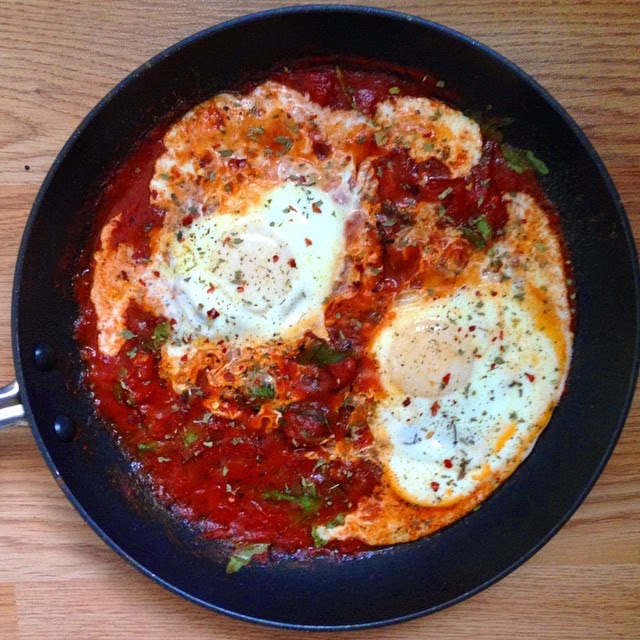
Shakshouka


Heat sauce over medium heat with some fresh arugula, and crack two eggs directly into the sauce. Sprinkle with red chili flakes, cumin and parsley, and then cover. Cook for about 3-5 minutes until egg is cooked but yolk is still loose. Optional: eat with Greek yogurt. 


Spiced Vegetable Frittata


Saute kale, two garlic cloves, half a medium chopped onion, chopped mushrooms and halved cherry tomatoes until onions are translucent and kale is wilted. While vegetables are cooking, scramble two eggs with thyme, oregano and paprika. When vegetables are cooked, spread them on the pan evenly and cover with egg mixture. Keep on low to medium heat until eggs are cooked, and top with Parmesan cheese. 


Warm Kale and Sweet Potato Salad with Mustard Balsamic Vinaigrette 


Spiralize a sweet potato using Blade B. Cook sweet potatoes with chopped onion in a pan with olive oil on medium heat until onions are browned and sweet potato becomes soft and crisp on the edges. Toss with massaged kale, chickpeas and hemp seeds. To make dressing, mix finely chopped garlic or garlic paste with Dijon mustard and balsamic vinegar. 


Zucchini "Fettuccine" with "Creamy" Sundried Tomato Sauce


Spiralize two zucchinis using Blade C. Cook in a pan on medium heat with olive oil until zucchini is soft. To make sauce, blend a handful of sundried tomatoes with a big scoop of Greek yogurt, chopped garlic (one to two cloves), olive oil and a splash of white vinegar. Pour over zucchini on low heat and toss. 


Garlic Beet Noodles with Wilted Beet Greens


Spiralize three beets, and save the greens. Roast in the oven at 400 degrees for 10 minutes. While beets are cooking, toss beet greens with chopped shallots and garlic. Toss all ingredients together and top with cracked black pepper and olive oil.


Crispy Sweet Potato and Onion Hash topped with a Fried Egg and Crispy Kale


Spiralize sweet potatoes and white onion using Blade A. Place on a large baking sheet along with kale. Drizzle with olive oil and cook at 425 degrees for about 20 minutes. In the meantime, fry an egg with olive oil in a small pan until whites are cooked and crispy but yolk is soft to touch. When vegetables are done, place sweet potato and onion on a plate. Top with the fried egg, and crunch the kale in your hands so you are able to sprinkle over the entire dish. 


Wednesday, August 27, 2014

Kale Me Maybe Round-Up: July/August Part 1

Hi Everyone!

Since my Instagram has really been taking off in the past month, I thought I would start posting weekly roundups of my recipes for those who have maybe missed a few. Since I have a lot of catching up to do, this post is going to have double the amount of posts I will normally do, but I am going to make this a weekly thing.

That being said, I'm still going to post full blogs with in-depth nutrition information and detailed recipes. This is just going to be a supplement to my normal posts.

If anyone wants more details on the recipes or has any questions, please don't hesitate to ask in the comments, and I would be happy to answer! Feel free to share your favorite dish as well.


A Mexican-Inspired Kale Salad with "Creamy" Avocado Lime Cilantro Dressing  


Massage kale with olive oil by kneading leaves together with your hands. Toss with black beans, chopped sweet onions, cherry tomatoes and chopped carrots. 

To make dressing, blend half an avocado with a scoop of Greek yogurt, a bunch of cilantro and the juice of two limes.


Spiralized Zucchini "Spaghetti"


Spiralize two zucchinis and cook in a large pan with olive oil until soft. Toss with tomato sauce, sauteed onions, mushrooms and lentils.


Lemon Vegetable Frittata 


Saute chopped onions, garlic, tomatoes, kale, mushrooms and potatoes. Scramble two eggs and pour over vegetables. Cook on medium heat for about 5 minutes or until eggs are fully cooked. Sprinkle with rosemary, parsley, paprika and lemon. 


Avocado Pesto Quinoa


Pesto: Blend half an avocado, two cloves of garlic, a handful of arugula, fresh basil leaves and a generous splash of olive oil. Mix into cooked quinoa with chopped cherry tomatoes and green onion. 


Lemon Zucchini "Fettucine" 


Spiralize two zucchinis with the thick blade. Toss in a large pan with olive oil along with garlic, arugula and cherry tomatoes. Top with squeezed lemon and dried parsley. 


Spicy White Bean Skillet


Saute chopped onions, tomatoes and kale in a large pan until onions are browned and translucent and kale is wilted. Add in white cannellini beans and toss with a large scoop of Greek yogurt and your hot sauce of choice (I used Trader Joes Red Chili Pepper Sauce).


Taste the Rainbow Breakfast


Chop two mini purple potatoes and then soften in the microwave for 2-3 minutes. Saute chopped potato, onions, garlic and kale in a pan. When vegetables are close to done, make a little space for an egg and crack into your crevice. Cook until whites are done and yolk is runny. Top with cracked black pepper.

Vegan Candy Bar Oatmeal


Cook steel cut oats and mix in two big scoops of unsweetened cocoa powder, a teaspoon of coconut oil, a teaspoon of vanilla extract and a splash of pure Grade B maple syrup. Top with unsweetened shredded coconut and 100% pure pure baking cocoa or cacao nibs.


Green Eggs (And No Ham)


Saute arugula, parsley and green onion in pan. Scramble with two eggs and then top with avocado slices and a sprig of cilantro. Slice cherry tomatoes in half and put around plate for garnish and to mix with egg when consumed. 


Avocado Toast with Cherry Tomatoes, Goat Cheese and Chili Flakes


Balsamic Kale Salad

Break cauliflower into pieces and roast at 425 degrees for about 30 minutes or until golden. Massage kale and toss with cauliflower, sliced red grapes, chopped sweet onions and chopped walnuts. Top with olive oil and balsamic vinegar. 

Fried Duck Egg on a Spiralized Sweet Potato Hash with Crispy Sage


Chop up sweet onions, garlic and a few sage leaves. Saute in olive oil and set aside. Spiralize a sweet potato and cook with olive oil, covered on medium heat for about five minutes. Toss with your previous mixture and set aside on a plate.Then cook a duck egg on medium heat until whites are cooked and yolk is firm but still runny with touch. Top plate with finished egg and garnish with some cracked black pepper.


Coconut Curry Zucchini Noodles


Spiralize two zucchinis. Mix with green curry sauce (I used Trader Joe's) and shredded unsweetened coconut. For an extra kick, eat with Sriracha. 

Balsamic Lentils & Chickpeas with Goat Cheese


Saute mushrooms and onions until onions are browned. Mix with cooked lentils and chickpeas, and pour balsamic vinegar over the mixture on low to medium heat. Cook for a minute or two to absorb flavor, and then top with crumbled goat cheese. 


Any Instagram posts not pictured here will be included in upcoming full-length blog posts!


Thursday, July 24, 2014

Should You Cleanse? + A Summery Chopped Kale Salad with Grilled Strawberries

Different quick-fix diets are always trendy, and more recently, everyone has been all about "cleansing," especially when it comes to juicing. Cleanses are nothing new-- the infamous Master Cleanse (tea, lemonade, maple syrup and cayenne pepper) has been around since the 1940s, but the recent interest in health-conscious eating has caused dieters and healthy eaters alike to turn to juice cleanses in hopes of detoxifying their bodies and maybe shedding a few pounds in the process. 

The healthiness of these cleanses has been debated, and while I plan to go into some of the pros and cons of juicing at the end of this post, I first want to add in a personal anecdote.

Now let me just specify something-- everyone's body is different and can handle different food groups, longer periods of time without eating, different dietary choices to function, etc. I don’t cleanse because I know it won’t work with MY body. I know personally that if I don't eat every few hours, my brain becomes cloudy, I get irritable and I can't focus. I also have a relationship with food that goes beyond just nutritional nourishment-- I love the taste of a satisfying dish, and creating different recipes gives me as much pleasure as actually enjoying the food. Drinking liquids all day just leaves me craving the sensation of chewing, a crunch in my mouth, food being swallowed. 

With that being said, juice cleanses make no sense for ME. I get a plethora of fruits and vegetables in my everyday diet, I need solid food to feel grounded, and if I ever feel like I have been consistently eating poorly and need to "detox" my body, I stick to fresh fruits and vegetables and clean foods like quinoa and legumes—food groups that make me feel good both mentally and physically, but also keep me feeling satiated.

Does this mean I won't have a green smoothie for breakfast on occasion? No. But for me, the negatives of a juice cleanse definitely outweigh the positives. Juice cleanses are too high in sugar for me, make me feel like I'm not eating varied meals and probably aren't necessary for me, considering our bodies naturally detox themselves, and I am not lacking in plant-based nutrients.

So when would a cleanse be good for someone? A short cleanse could be beneficial for a person who has consistently poor eating habits, who is lacking in essential nutrients, and who may need a drastic way a kick start healthy eating habits.

If you do decide to do a cleanse because you think your body needs it, try this Dr. Oz Detox Cleanse, as it is sure to be balanced and includes other essential nutrients that aren’t just found in fruits and vegetables.

So now, as promised, here are just a few of the pros and cons of undertaking a cleanse. Take a look at this list and try to be in touch with your body to see if this makes sense for you. 

Pros:
  • Juice cleansing can be a good way to get in an abundance of concentrated nutrients from fruits and vegetables, especially if your diet is currently poor
  • You are giving your body a break from toxins such as refined sugar, refined carbohydrates, gluten and processed foods
  • It gives your digestive system a break while still allowing you to absorb nutrients easily
  • Some people report feeling more energetic, lighter and clearer while on a juice cleanse.
Cons:
  • You lose important fiber when you juice. Fiber helps with heart health, digestion and satiety (feeling full), so you lose those benefits from your produce when you juice them. 
  • It can be expensive. You either have to buy an expensive juicer, or you can do a preset cleanse, which can cost $70 and upwards. 
  • Juicing can be high in sugar and calories, due to the concentrated amount of fruit juice in many drinks. If you want to minimize sugar and calorie intake, stick to vegetable-heavy drinks rather than fruit ones. You can also balance out the nutrients by adding protein to your drink such as almond butter or Greek yogurt. 
  • You're leaving out important nutrients only found in other food groups.
Additional, in-depth research may be necessary for you to decide before undertaking a detox. I can tell you right now, though, if this is just a way to lose weight, cleansing is not the answer. This would fall under the category of an ineffective, quick-fix diet, with only temporary results. Any weight you may lose in a day or two WILL return, and you might even slow down your metabolism in the process. 

Now onto the recipe! This salad may be the next best thing to juicing. Filled with fruits and vegetables, it is the perfect amount of sweet and savory that reminds me of a tropical summer-- and grilling strawberries in coconut oil is one of the best things I have discovered! I will definitely be eating those again.

Summery Chopped Kale Salad with Grilled Strawberries


Ingredients:
Two big leaves of fresh kale, chopped finely
2 green onions
1/2 an avocado
5 medium strawberries
A handful of fresh basil, chopped
1/3 can of chickpeas, drained and rinsed
A handful of microgreens
Parsley
Cumin
Olive Oil 
Balsamic Vinegar
1-2 Limes
1 tsp coconut Oil

1. Chop your kale finely, then massage by pouring a little bit of olive oil over the leaves and kneading with your hands. Chop basil and avocado and set aside.

2. Heat the coconut oil in a medium pan on medium heat. Add the green onion stalks and whole strawberries onto the pan. Cook until outside is well done (just a little blackened) and flip the strawberries a few times to cook on all sides. Onions and strawberries should look grilled. Set them aside.

3. In the same pan, toss the chickpeas for about 1 minute with a generous sprinkle of both parsley and cumin.

4. Toss all the ingredients in a large bowl (or arrange them beautifully!) with a splash of olive oil and balsamic vinegar, along with the juice of one or two limes, depending on how much lime flavor you want on your dressing.

Optional: I didn't try this, but after I finished, I thought it might be tasty to add a little bit of unsweetened, shredded coconut to enhance texture and bring out the tropical flavor. Let me know what you think if you decide to give this edition a try!

(Serves 1)

Wednesday, July 16, 2014

Why is Sugar So Bad for You? + Vegan and Sugarless Pumpkin Chocolate Chip Cookies

Happy summer everyone! While I have to say (again) that it has been awhile since I have posted, I wanted to let you all know that the Kale Me Maybe Instagram is really starting to take off. I will be posting there about once a day with all my culinary creations, and I am going to REALLY, REALLY put in the effort to post on here about once a week so you can get the full recipes as well as learn some nutritional tidbits.

When it comes to nutrition, we have heard the common enemies: fat, preservatives, salt, pesticides.
But one of the worst things you can consume is sugar.

Even if you are avoiding desserts, sugar is probably finding its way into your diet through fruit drinks, coffees, packaged foods and maybe even unsuspecting meals like salads. Just because your label is free of the word "sugar" doesn't mean you are in the clear, either. Sugar likes to disguise itself as "sucrose, fructose, corn syrup, dextrose, malt syrup, maltose, molasses, barley malt, brown rice syrup, cane juice..." the list goes on.

It still surprises me that people ask "Why is sugar so bad?" but then I think about how most of us were raised on sugary breakfast cereals and artificial fruit snacks and that the current food industry pushes these products onto us through the mass media. For some people, sugar is just a normal part of their diet-- no one has ever told them the harm it causes. Sugar damages us beyond just our weight, putting us at risk for diabetes, cancer, heart disease and addiction. It also can be harmful to our mental states, with studies showing that it can cause depression (and you know how big I am on the food and mood correlation).

Here are some of the most important reasons that sugar is our nutritional nemesis:

  • It contains no essential nutrients: Did anyone say empty calories? The things you eat should benefit you in some way, and sugar does not.
  • Sugar makes you fat: Sugar is a leading contributor to obesity, not just in children, but in adults too. People who consume the most sugar are most likely to be obese, especially because of the way sugar affects the brain and causes us to not feel satiated. 
  • It can cause cancer: Constantly elevated insulin levels and chronic inflammation-- both an effect of sugar-- can contribute to cancer risks
  • It's highly addictive: Many nutritionists and scientists liken the effect of sugar on the brain to that of drugs-- and take it from a former [sugar] addict-- they're right! Sugar causes a massive release of dopamine in the brain, activating our reward centers and causing a strong addiction to the sweetener. I can definitely attest to this: at one point in my life, I was constantly eating candy and craving dessert after every meal. Once I ditched sugar completely, I stopped craving it. Simple as that. But the same as a drug relapse, if I start to get in the habit of eating it again, I need it constantly and slip back into addiction. This just goes to show how powerful the effect of sugar really is, even if you are not aware of it.
  • It puts you at risk for heart disease: Sugar raises your cholesterol and triglyceride levels, and it also affects the pumping mechanism of your heart. 
  • It can make you depressed: The ups and downs from glucose absorption disturb the brain and exacerbate anxiety and depression. Not only that, but sugar also uses up the mood-enhancing B vitamins. 
That being said, "sugar-free" isn't always the answer, as many substitutes have similar effects, especially ones that contain aspartame like Equal, as aspartame is carcinogenic and can cause emotional disorders, tumors and various diseases. Even agave nectar, which was once considered a good alternative, is considered harmful, as it is still a processed sugar and the amount of syrup needed to sweeten things is very high in sugar content.

So what's the best sugar alternative? If you need to sweeten something, it's best to use Stevia, honey or maple syrup, as they are all natural and contain various other health benefits. Of course, use these in moderation too, as sugar in excess is never good for you, even if it's from a natural source.

To go along with the sweet theme of this post, I thought I would share a dessert recipe, which is rare for me since I am not much of a baker. I just came up with this new Pumpkin Chocolate Chip Cookie recipe, which, of course, has no sugar and instead uses a small amount of maple syrup as a sweetener. These came out SO tasty, and it will be easy for you to recreate them, as I actually accurately measured everything this time.

These cookies are vegan, have no added sugar, no butter and no eggs, and they can be gluten free if you take out the oats and use another flour instead. There are no bad ingredients, so these can even be used as breakfast cookies.


Pumpkin Chocolate Chip Cookies

Ingredients:
1 cup pumpkin puree
1 cup almond flour
1 cup rolled oats
1/4 cup maple syrup (Grade B)
1/4 Unrefined Virgin coconut oil
1 tsp vanilla
1/2 tsp baking soda
1/2 tsp cinnamon
3 tsp cocoa powder
6  small squares of 70% or higher dark chocolate, with no sugar or dairy added, chopped

1. Preheat oven to 350 degrees Fahrenheit.
2. Mix all the ingredients in a large bowl.
3. Grease a baking sheet with some coconut oil. Place spoon sized chunks of the batter onto the baking sheet, leaving a little bit of room for the cookies to expand (they don't get much bigger).
4. Bake for about 15-20 minutes. If you like your cookies softer, bake for 15 minutes, and if you like them harder, bake for a little over 20.
5. Let cookies cool. If you want a little extra sweetness, drizzle maple syrup on top of the cookies when they are done baking.

(Makes about 10 cookies)

What are your favorite no sugar added recipes? Share in the comments! And be sure to follow @kalememaybe on Instagram!


Monday, April 28, 2014

Natural Remedies + Fried Egg and Mushroom Hash with Wilted Arugula


"Let food be thy medicine and medicine be thy food"-Hippocrates

My love for journalism, psychology and food is not a coincidence. It all boils down to my fascination with human life. Food is the means by which we live, psychology is how we as people interpret situations and interact within our lives and journalism chronicles society, relationships and occurrences. And while food still may seem like the odd one out of the equation, what many people don't realize is that food is not only a means for survival, but a way to shape and form the quality of our lives.

I am VERY passionate about the quality of human life. It is what drives me to do everything I do everyday-- to keep my body and mind in a symbiotic balance that allows them to influence each other to feel the best that they can. And while it's drilled into us over and over again to eat well, to maintain our weight, to bring energy and vitality into our daily lives, the impact of food goes so much further than that. Food affects the way we think, our mood, the way we move-- both overall and in a specific moment.

While this may sound like a bunch of new-age baloney, the reason I love this topic so much is because there really is scientific research behind it. I've mentioned it before, but I spent an entire year writing my journalism honors thesis on the connection between food and mood disorders (which you can read a little bit about here). A lot of credible research exists that supports the nutrition and brain connection (I'm talking Harvard studies), but it is so rarely discussed, and it's certainly not taught in medical school, which is truly unfortunate. Because I am aware of it, I am trying to share this knowledge and make it a mainstream topic.

With all this in mind, there are ways to cure everyday ailments in our lives using just the power of food.  With today's antibiotic crisis and over-prescription of medication, it's always best to try the natural route first before jumping straight to an Advil if you have a headache or a Tylenol PM if you can't sleep at night:

For example:

If you are having anxiety---> Try upping your intake of animal protein. The trytophan in meats like turkey and beef (try to get free range and grass-fed for optimal effects) turns into serotonin, which is a calming mood booster. The effects of this are best observed over the long-term.
If you are sad---> Try eating salmon: Salmon is high in heart-healthy omega-3s, which have been proven to boost mood.
If you are having menstrual cramps---> Try eating dark chocolate. Grab a piece of 70 percent cocoa or higher for another serotonin-booster and muscle relaxer.
If you can't sleep---> Try chamomile tea or lavender. Or better yet, chamomile lavender tea! Both are relaxing, natural sleep aids.
If you have a bad cough--->try some honey. It not only soothes and coats the throat, but it also thins mucus and provides your body with some much needed antioxidants, which fight off your sickness.

These are just a few simple examples of how to use food to help with common discomforts. If you ever feel something is wrong, try to get to the root of the problem and not just treat the symptoms. With the internet, there is no excuse not to look up "alternative" methods of treating certain issues.

Now onto the recipe. My favorite meal is brunch, and this dish works perfectly for entertaining, as I don't think it would be difficult to make for a few people unless you really have a distaste for chopping (which I personally find relaxing). I start almost every day with eggs, and if I can incorporate a good load of vegetables along with it, I'm all for it!

Fried Egg and Mushroom Hash with Garlic Wilted Arugula

Ingredients:
1/4 yellow onion, chopped
2-3 mini yellow potatoes
 1/4-1/2 cup white mushrooms, chopped
2-3 cloves of garlic. finely minced
1 cup of arugula
1 egg
Extra virgin olive oil
Rosemary
Pepper

1. First, chop up all your ingredients. I would suggest doing the potatoes first so you can heat them in the microwave for 2-3 minutes before sauteeing to soften while you chop the rest of your ingredients.
2. Heat some olive oil in a large pan over low to medium heat. Add the arugula and garlic to the pan and stir to coat with olive oil, lowering the temperature if necessary so you don't burn the garlic. Cook for one to two minutes until arugula is wilted and coated in garlic and transfer to a plate. You will eventually place the rest of the hash atop this wilted arugula.
3. Add a little bit more olive oil to the pan and let it get warm. Add the onion, mushroom, potatoes and rosemary and cook until mushrooms get soft and onions are translucent and a little brown.  Transfer to plate on top of wilted arugula.
4. Crack your egg on the pan and cook until whites are fully cooked, but the yolk should be runny. If you are having a hard time getting the whites fully cooked, flip egg with a spatula for 30 seconds or so and then transfer to the plate. If you flip it for too long the yolk will begin to cook (but if you like it that way, go for it!)
5. Top your vegetable hash with your egg, sprinkle some pepper on top and enjoy!

Also be sure to check out the Kale Me Maybe official Instagram for more frequent updates and some delicious food porn! @Kalememaybe


Friday, February 7, 2014

Reading Food Labels + Lemony Garlic Spaghetti Squash


It has been awhile since I have last posted, and I apologize greatly (again, I know). You all have been asking me to update my blog, and I promise I want to! I'm cooking everyday, it's just so easy to get caught up in the rush of my life, and sometimes I need to remind myself to take a moment to just sit down and write. I've been experimenting with a lot of new tools and flavors recently, so hopefully I will be having some interesting recipes coming your way in a more steady stream of posts.

To get the ball rolling, I decided to post a very simple recipe. Sometimes I forget that not everyone likes to spend all day chopping and preparing like I do, so I thought it might be nice to include a recipe for those who like to keep it easy.

Now before I begin with the recipe, I wanted to go ahead and talk a little bit about food labeling. I know I have touched on it before, but as I'm out shopping or getting food with people, I begin to realize more and more that people don't read labels. Or, rather, they don't know how to read food labels or know which labels to read. Half of the reason this blog exists is because I want to educate others on nutrition, so I've put together some tips o what you need to know about food labels:


  • A label that says "NATURAL" means nothing. There are no official FDA guidelines for "natural," and plenty of junk foods slap a "natural" label on the front to attract customers. What people need to pay the most attention to are the ingredients on the back as well as the fat, sugar, and sodium content. Remember, not all calories are created equal, so that's not always the best way to solely judge your food. 
  • Look out for hidden sugars: I mentioned this in my previous post, but I wanted to elaborate and emphasize that hidden sugars occur in many places other than just sweets. This can include anything from tomato sauce, meats, chips, etc. Especially look out in fruit juices and teas. I was out with a friend recently and he went to purchase a tea that said naturally sweetened with honey. Sounds great, but in addition to honey, it was also sweetened with cane sugar. Why is sugar so bad? Sugar is the root of many diseases, both physical and mental, and also contributes to weight gain and mood disorders.
  • That being said, ingredients are listed in descending order of quantity. In the tea mentioned above, cane sugar was the second ingredient, and water was the first. That means that "tea" is actually mostly sugar water. Keep this in mind when you read ingredients. Maybe sugar is added, but if it is at the very end, it may just be very little. 

Now onto the fun stuff: Spaghetti Squash! If you've never had it before, now might by the time to fall in love. The spaghetti squash isn't butternut squash or acorn squash made into spaghetti. It's its own squash that when sliced and baked (or microwaved) can be scooped out to be made into a spaghetti-like dish that tastes pretty darn good if you ask me. 

While the consistency is a little different than spiralized vegetables, and I can't quite vouch that it tastes exactly the same as spaghetti, it's an amazing vegetable that can be used as a pasta substitute in a variety of ways. It's great for bakes, used with tomato sauce, or tossed with other vegetables. 

It's pretty simple to make, and it is full of great nutrients such as vitamin A and C. It's also a great source of fiber, and you don't get all the carbs you would from eating regular pasta (which means, of course, significantly less calories.


Simple Lemony Garlic Spaghetti Squash
(serves 2)

Ingredients:
1 spaghetti squash
4 large cloves of garlic
1/2 cup of basil, chopped
Olive Oil
Parmesan Cheese
2 small lemons

1. Cut your spaghetti squash in half lengthwise. Scoop out the pulp and seeds from the top. 

2. There are two ways to cook the spaghetti squash. The first is to place the squash face down atop tinfoil and place in the oven at 375 degrees Fahrenheit for about 45 minutes. The second is to put a tablespoon of water into the spaghetti squash when it's right side up, and cook in the microwave for about 10-15 minutes. Once the spaghetti squash is thoroughly cooked, you should be able to easily scoop out the entire squash it should be soft.

3. While the squash is cooking, finely chop your garlic and basil. 

4. When squash is ready, heat up a pan with olive oil. Depending on the size of your pan, you might have to do the two halves separately (in which case, you would use half of the garlic and basil for each). Toss the spaghetti squash with garlic, basil, and more olive oil to taste for just a minute or two. You want the garlic and basil to only cook for a short time to keep them mostly raw and retain the strong flavor. Remove from heat and squeeze lemon on squash and toss again. 

5. Top with shredded Parmesan cheese to taste.

Enjoy! And I will work on posting some more recipes soon!