Showing posts with label cheese. Show all posts

Friday, February 7, 2014

Reading Food Labels + Lemony Garlic Spaghetti Squash


It has been awhile since I have last posted, and I apologize greatly (again, I know). You all have been asking me to update my blog, and I promise I want to! I'm cooking everyday, it's just so easy to get caught up in the rush of my life, and sometimes I need to remind myself to take a moment to just sit down and write. I've been experimenting with a lot of new tools and flavors recently, so hopefully I will be having some interesting recipes coming your way in a more steady stream of posts.

To get the ball rolling, I decided to post a very simple recipe. Sometimes I forget that not everyone likes to spend all day chopping and preparing like I do, so I thought it might be nice to include a recipe for those who like to keep it easy.

Now before I begin with the recipe, I wanted to go ahead and talk a little bit about food labeling. I know I have touched on it before, but as I'm out shopping or getting food with people, I begin to realize more and more that people don't read labels. Or, rather, they don't know how to read food labels or know which labels to read. Half of the reason this blog exists is because I want to educate others on nutrition, so I've put together some tips o what you need to know about food labels:


  • A label that says "NATURAL" means nothing. There are no official FDA guidelines for "natural," and plenty of junk foods slap a "natural" label on the front to attract customers. What people need to pay the most attention to are the ingredients on the back as well as the fat, sugar, and sodium content. Remember, not all calories are created equal, so that's not always the best way to solely judge your food. 
  • Look out for hidden sugars: I mentioned this in my previous post, but I wanted to elaborate and emphasize that hidden sugars occur in many places other than just sweets. This can include anything from tomato sauce, meats, chips, etc. Especially look out in fruit juices and teas. I was out with a friend recently and he went to purchase a tea that said naturally sweetened with honey. Sounds great, but in addition to honey, it was also sweetened with cane sugar. Why is sugar so bad? Sugar is the root of many diseases, both physical and mental, and also contributes to weight gain and mood disorders.
  • That being said, ingredients are listed in descending order of quantity. In the tea mentioned above, cane sugar was the second ingredient, and water was the first. That means that "tea" is actually mostly sugar water. Keep this in mind when you read ingredients. Maybe sugar is added, but if it is at the very end, it may just be very little. 

Now onto the fun stuff: Spaghetti Squash! If you've never had it before, now might by the time to fall in love. The spaghetti squash isn't butternut squash or acorn squash made into spaghetti. It's its own squash that when sliced and baked (or microwaved) can be scooped out to be made into a spaghetti-like dish that tastes pretty darn good if you ask me. 

While the consistency is a little different than spiralized vegetables, and I can't quite vouch that it tastes exactly the same as spaghetti, it's an amazing vegetable that can be used as a pasta substitute in a variety of ways. It's great for bakes, used with tomato sauce, or tossed with other vegetables. 

It's pretty simple to make, and it is full of great nutrients such as vitamin A and C. It's also a great source of fiber, and you don't get all the carbs you would from eating regular pasta (which means, of course, significantly less calories.


Simple Lemony Garlic Spaghetti Squash
(serves 2)

Ingredients:
1 spaghetti squash
4 large cloves of garlic
1/2 cup of basil, chopped
Olive Oil
Parmesan Cheese
2 small lemons

1. Cut your spaghetti squash in half lengthwise. Scoop out the pulp and seeds from the top. 

2. There are two ways to cook the spaghetti squash. The first is to place the squash face down atop tinfoil and place in the oven at 375 degrees Fahrenheit for about 45 minutes. The second is to put a tablespoon of water into the spaghetti squash when it's right side up, and cook in the microwave for about 10-15 minutes. Once the spaghetti squash is thoroughly cooked, you should be able to easily scoop out the entire squash it should be soft.

3. While the squash is cooking, finely chop your garlic and basil. 

4. When squash is ready, heat up a pan with olive oil. Depending on the size of your pan, you might have to do the two halves separately (in which case, you would use half of the garlic and basil for each). Toss the spaghetti squash with garlic, basil, and more olive oil to taste for just a minute or two. You want the garlic and basil to only cook for a short time to keep them mostly raw and retain the strong flavor. Remove from heat and squeeze lemon on squash and toss again. 

5. Top with shredded Parmesan cheese to taste.

Enjoy! And I will work on posting some more recipes soon! 

Thursday, October 10, 2013

Fall's Nutritional Superfood: Pumpkin + Recipe for Pumpkin Pesto Pasta


We all know that come October comes pumpkin everything -- from lattes to scones, to pies and bread. While it's tempting to indulge in these sweet treats, there are plenty of things you can do yourself with canned pumpkin at home without all those added sugars. Believe it or not,  pumpkin is extremely healthy, and versatile! It can be used for both sweet and savory dishes, and I personally love to use pumpkin in my dinners. I love this time of year not just because it indicates fall, because it gives me a fun autumn squash to spice up my cooking for a few months!

Why you should be eating pumpkin (besides from the fact that it tastes delicious)
  • It's filled with vitamins, including A, C, E, beta carotene, potassium, and B vitamins including folates, niacin, and B6
  • It's high in fiber (which means its going to keep you full, maintain a healthy weight, and help your digestive system)
  • It's a great source of antioxidants
So what does this all mean? It's a low calorie, mood-boosting, good-for-your-skin-and-body vegetable that should be utilized while it's in season! 

As I said before, I love making pumpkin savory. It can be a good cheese substitute for macaroni and cheese, used in a risotto, even made into a savory bread. But, it can also be made sweet. I like to add it to my oatmeal in the morning with cinnamon or blended into a pumpkin pie smoothie. This time I chose to make it into a pasta, as I had a lot of extra basil and wanted to make a pesto. I totally came up with this recipe out of my head, and I wasn't sure how it was going to turn out, but it tasted so much better than I could have imagined (and shout-out to my girls Vivian and Greer for cooking it with me!). You can always just make the pumpkin sauce or pesto on its own, but I think together they complemented each other just perfectly.

Pumpkin Pesto Pasta
(serves about 3)

Pasta: 3/4 lb brown rice pasta

For the Pesto:

2 cups basil
1 cup arugula
1/2 cup Parmesan cheese, grated
1/2 cup Extra Virgin Olive Oil
1/2 lemon (to juice)
2 large cloves of garlic
1/4 cup walnuts

For the Pumpkin Sauce:

3/4 can of pureed pumpkin (NOT pumpkin pie mix)
1/2 cup Greek yogurt
A splash or two of white wine vinegar
1-2 large cloves of garlic
3/4 cup of onions, chopped


(Remember, all these measurements are estimates, feel free to play around to taste!)

1. Boil your water for the pasta. In the meantime, begin chopping your ingredients, but don't forget to add the pasta once the water is boiling and check on it when it's done, about 8 minutes.

2. Start chopping ingredients for the pesto. If you have a high quality blender like the Vitamix, then you can just throw everything in the blender and blend until smooth. If you don't have that amazing blender, then chop your ingredients so that it's easier to finely blend. If it's hard to get the ingredients smooth, try adding a little bit of olive oil as well as lemon.

3. Chop garlic and onions for the pumpkin sauce. Heat some olive oil over a pan, and add garlic and onions. Cook until onions are translucent, making sure to stir often so the garlic doesn't burn. Then add in the pumpkin puree and Greek yogurt, stirring until ingredients are mixed together and sauce is warm and thickened. Add a splash of white wine vinegar here and there both for flavor and consistency.

4. To serve, pour sauce over pasta and mix in. Add a spoonful of pesto on top, and sprinkle with Parmesan cheese and chopped walnuts to taste.

What are your favorite pumpkin recipes? The options are endless, and I'll be sure to be making more pumpkin goodness as fall continues on!


Monday, June 24, 2013

5 Quick and Easy Summer Treats

When I think summer, I think of sun, outdoor activities and light foods. It can be tempting to buy meals out, but there are so many quick, simple and healthy fresh summer foods that you can make yourself. Here are five very nutritious summer recipes that are a breeze!


1. Kelp Noodle Bowl
Great for a delicious macronutrient-filled lunch. Low in carbs and fat! 

*Kelp Noodles
*Avocado
*Lemon
*Kale
*Hemp Seed

Mix mashed avocado and kale with kelp noodles. Top with squeezed lemon and hemp seed.

What you're getting: More than 70 minerals and 20 amino acids, calcium, folic acid, Vitamin C, fiber, antioxidants, potassium, healthy fats, protein.


Hint: If you're in a mad search for kelp noodles, I would check your local Whole Foods.


2. Strawberry-Mint Lemonade
Get your fix of a summery drink without all the added cane sugar! Plus, mint provides a lot of extra health benefits.

*Strawberries
*Fresh Mint
*Squeezed Lemon
*Water
*Stevia/Agave Syrup

Blend a couple of strawberries, a few sprigs of fresh mint, one or two squeezed lemons, and about a cup of water in a blender. Taste to adjust if it's too sour, watery etc. Add sweetener as desired (I used one packet of Stevia and a splash of agave).

What you're getting: Vitamin C, antioxidants, toxin eliminator


3. Mexican Pizza
No need to run to Taco Bell with this dish!

*Tortilla
*Tomato Sauce
*Tomatoes
*Green and White Onion
*Beans
*Cheese

Top a tortilla with ingredients, starting with tomato sauce and cheese. Bake in the oven at 450 degrees for about 7-10 minutes.

What you're getting: Lots of vitamins, potassium, fiber, calcium, protein.


4. Avocado Egg Salad
Make egg salad low fat by taking out mayo and replacing it with avocado and Greek yogurt.

*Hard Boiled Egg
*Avocado
*Greek Yogurt
*Cilantro
*Lemon

What you're getting: Protein, healthy fats, calcium, Vitamin C, choline, magnesium, iron


5. Greek Salad
You can't go wrong with a simple Greek salad!

*Cucumbers
*Red Onion
*Tomatoes
*Dill
*Non fat Feta Cheese
*Lemon
*Olive Oil

What you're getting: Lots of vegetables, which means lots of vitamins, healthy fat, calcium,


Also, don't forget to check out Kale Me Maybe on Instagram and Pinterest!

Friday, June 14, 2013

Foods that Help With Stress + A Garden Veggie "Frittata"


I'm back! I've had the craziest, hectic, and most exciting past few weeks! I finally completed my senior thesis, graduated from NYU, and spent an unbelievable ten days in Israel. Now that I'm back in Los Angeles, it's pretty bittersweet. I miss New York, but I'm enjoying the more laid back lifestyle of California. Going to Israel was an amazing graduation treat, and now I'm absolutely hit with the travel bug again!

Things are beginning to calm down, but at the same time, life is a bit crazy. I'm sure I'll be managing a lot of my post-graduate stress by taking some time for myself and cooking (and I'll post it all for you to see!). But, I figured I'm not alone in the chaos of trying to figure out what I'm doing with my life. I thought this would be a good time to talk about foods that can help with stress, especially since this was a large part of my senior thesis on nutritional therapy for anxiety and depression--which, by the way, is fully complete if anyone is interested in reading.

I have previously posted the power of food and mood in my post about Brain Boosters, but now is a good time to focus on what foods help alleviate stress. Many people don't realize that the foods we consume greatly affect our overall mood. To put it VERY simply, healthy foods are the best for your mood, obviously. But there are some other foods that surprisingly play a large role in mood regulation, such as animal proteins.

If you are interested in this field, I would highly recommend reading The Mood Cure by Julia Ross. This book, recommended to me by my friend Brooke, is what inspired me to write my senior thesis, and almost every person I interviewed for my piece was inspired by this book and Ross's findings. The book explains how you can overcome anxiety and depression simply by changing your diet. And while you may be skeptical, you might be surprised on the amount of scientific and psychological research that supports this. I spent a year writing and reporting about this subject, and I can tell you, I'm pretty convinced.

Anyway, for those of us who are beginning to get a little bit stressed out over the big changes in life, I would recommend eating these foods to help make your life a little easier:

  • Animal protein, especially beef, turkey, chicken, fish and eggs: The tryptophan found in animal protein converts into serotonin, the neurotransmitter responsible for feeling pleasant. And fish are high in omega-3s, which have been proven to boost mood. Remember-- it's important to eat organic, free range, and grass-fed meat whenever possible!
  • Seaweed: The high amount of minerals and nutrients present in seaweed is helpful for when your body is depleted after continuous stress.
  • Whole Grains/Complex Carbohydrates: Bust out the whole wheat pasta, quinoa, or brown rice! Like meats, complex carbohydrates boost serotonin levels to help calm you down.
  • Berries: Berries replete the body with all the vitamins you lost when you were freaking out!
  • Almonds: Almonds help lower your blood pressure to help your body from going too crazy.
  • Dark Chocolate: Dark chocolate has been proven to reduce stress hormone levels. 
Maybe even combine a few power stress relievers.. I'm thinking some Greek yogurt with berries, almonds and dark chocolate shavings. 

In the end, if you are eating well, it will help you cope with stress. Fill up on those fruits and veggies! 

In the spirit of veggies, here is a recipe for a delicious egg I made a month or two ago that I couldn't get over. I have to have eggs for breakfast, so I love to try tons of combinations. I fell in love with all the different textures of this "frittata." I call it a "frittata"in quotes because you actually don't need to stick it in the oven like a typical frittata, which actually makes it a bit easier. 

I'd like to remind everyone, in case anyone forgot, that when I cook I don't really measure. It's all about what you like and experimentation, so I always estimate when I write out the ingredients. 

Garden Veggie "Frittata"


Ingredients:
2 eggs, beaten (plus egg beaters if needed)
6 or so grape tomatoes, chopped
1/4 avocado
2 green onions, chopped
Handful of cilantro, chopped
1/4 medium onion, chopped
Handful of shaved brussels sprouts
1/2 cup of kale
Handful of nonfat feta cheese
1/2 lemon, to squeeze


1. Sautee chopped onion, brussels sprouts, and kale in a pan until onions are translucent and slightly browned. Brussels sprouts should be soft, and the kale should be wilted.


2. Spread vegetables so they are even across the pan. Lower the flame, and pour eggs over the vegetables evenly. Keep the heat low and give the eggs about 5 minutes to cook thoroughly. Lift and tilt pan to distribute runny egg if necessary. 


3. Once the egg is cooked, top with your remaining ingredients (tomatoes, avocado, cilantro, green onion, and feta cheese). Squeeze lemon on top for extra zest. Enjoy!


Wednesday, May 15, 2013

What Are Superfoods? + Simple Salads

Load up on superfoods with these easy, healthy salad.

Sorry for the hiatus! It has been awhile, but I have a good reason for not writing: I finished college! I officially finished my thesis about a week ago, and I will be graduating next Tuesday and Wednesday. Insane! I've been busier than I thought I would be, finishing up with my work at the elementary school as well as my internship at CityEats, so I haven't had a solid amount of time to sit down and write. Now that my schedule is a little calmer, I can finally catch up on posts and start sharing all the goodies I have been cooking.

Today's post will cover the foods that everyone should be eating: superfoods. I'm sure you've heard of the term before, and while there isn't exactly a concrete definition, superfoods are foods that are highly nutritious, filled with tons of positive health benefits and very few, if any, negative properties. These are the foods that are going to aid in your overall health, help you live longer, and make you feel better--probably even help you lose weight. These fruits, vegetables, and select grains are lower in calories, but provide a heavy dose of essential nutrients and antioxidants.

So, which foods are superfoods? Here's a list of some of the most powerful things to put in our mouths
  • Fruits:
    • Apples
    • Avocado
    • Bananas
    • Blueberries
    • Brussels Sprouts
    • Carrots
    • Cauliflower
    • Cherries
    • Kiwi
    • Lemon
    • Oranges
    • Pomegranates
    • Pumpkin
  • Vegetables:
    • Artichokes
    • Bell Peppers
    • Broccoli
    • Kale
    • Mushrooms
    • Onions
    • Spinach
    • Sweet Potatoes
    • Tomatoes
  • Grains and Legumes:
    • Beans
    • Lentils
    • Oats
    • Quinoa
  • Animal Products:
    • Turkey
    • Wild Salmon
  • Other:
    • Chia Seeds
    • Cinnamon
    • Dark Chocolate
    • Extra Virgin Olive Oil
    • Flax
    • Garlic
    • Tea
    • Walnuts
    • Yogurt
Now if you are into health, I'm sure you incorporate a lot of these foods into your diet without even realizing. As you can see, if you are eating a fruit or vegetable, it's probably safe to say it's a superfood. All of my recipes on this site include--at the very least--one superfood. It shouldn't be hard for you to find ways to add them into your meals. Toss a little bit of olive oil on some veggies, in a salad, on an egg. Eat a piece of dark chocolate everyday (remember, 70% or higher!). Eat an apple in the morning.

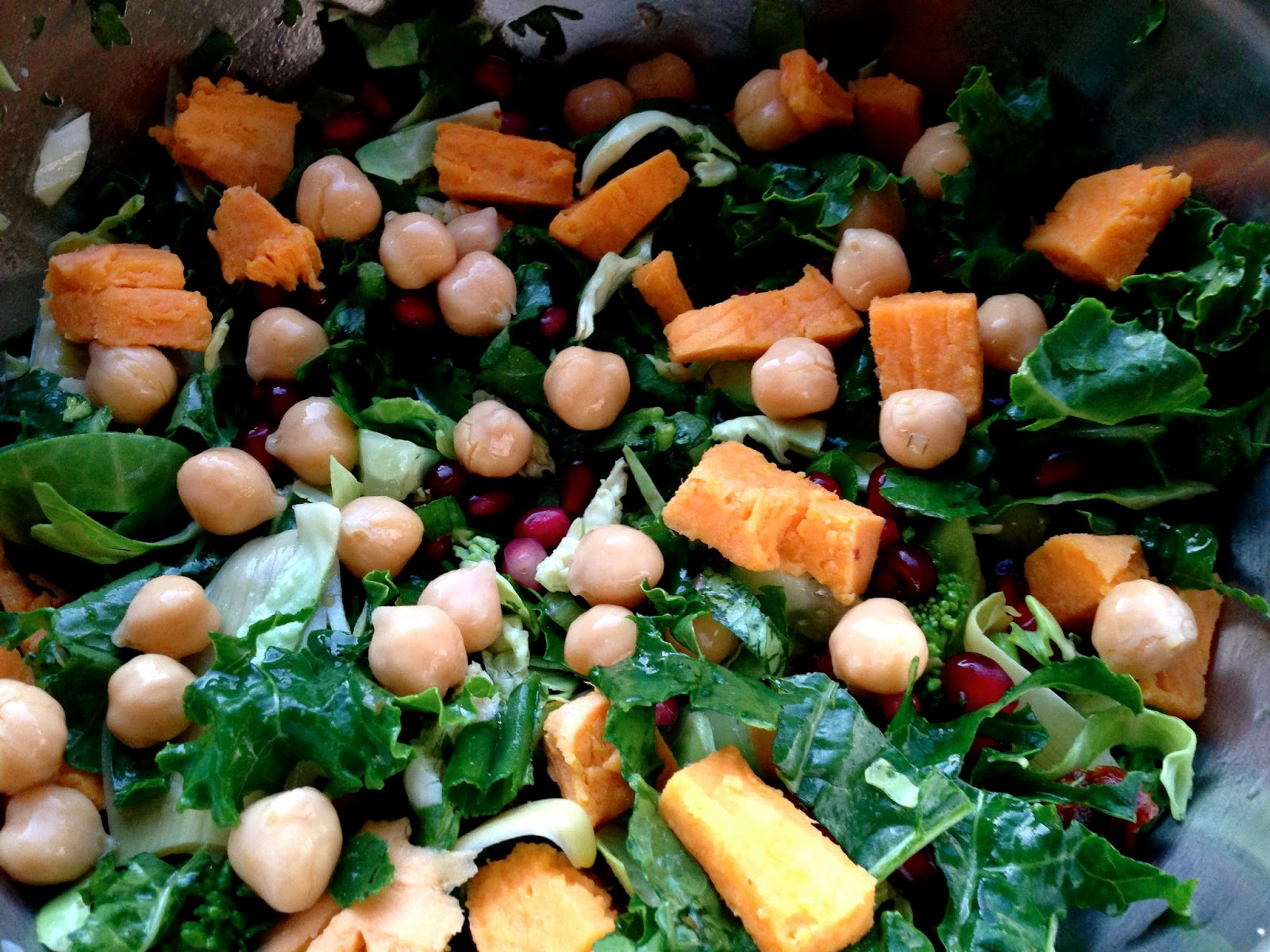
Be creative... or make the salad (below) that I made a few weeks ago!

It's really easy to cram a ton of superfoods together, as there is such a good balance of fruits, vegetables, proteins, and carbs. The salad I created can be made in two ways. In the first version, the green superfood salad is probably best as a side. In the second version, I added in a lot of protein and even more superfoods, and I was actually really surprised at how well the flavors worked together, since there were a lot of flavors! I would definitely go for the full salad, but hey, sometimes we aren't all that hungry!  

Ingredients:

 Version 1: Green Superfood Salad


Kale
Brussels sprouts
Cilantro
Green onion
Broccoli
Cucumber

Version 2: Super Superfoods Salad


In addition to the ingredients in version 1:

Sundried tomato
Artichoke
Pomegranate seeds
Feta cheese
Chia seeds
Chick peas
Lentils
Cooked sweet potato

Dressing: Balsamic vinegar & olive oil
Optional topping: Brewer's yeast for extra vitamins and a savory crunch


This salad was very filling, but left me feeling light and refreshed. Perfect for summer!

Sunday, April 21, 2013

Cooking Inspiration + Spring Risotto with Ramps and Pan-Seared Scallops


People always ask me how I learned how to cook, and I have found that I don't really have an easy answer. Sure, I watched my mom and my grandma cook, enjoyed programs on the Food Network, and followed some recipes here and there, but that's not really how I learned.

For me, the pairing of flavors, choices of textures, and addition of spices is innate. I'd like to say once you start cooking, you'll have it all figured out, but I can't say that for everyone. But what I can say is that you'll start to learn, and if you're like me, you'll start to take inspiration from recipes. While I am not too fond of following recipes ingredient by ingredient, or by exact amount, I do love to get inspiration from other people's creations, and this comes from reading, watching, and experimenting (and also eating).


While it's easier for me to make dishes on my own now, there was a time when I wasn't so confident and needed some guidance. So I thought it would be a nice idea for me to share my favorite food sites to give you all a taste of what inspires me and what hopefully will inspire you.

Food Sites:
  • Food Gawker- Great for healthy and non-healthy food alike. I like to click the healthy tag, but I also like to type in an ingredient I have and browse all the recipes that include it. The site also redirects you to the blog the recipe originated from, so it's great for discovering new blogs. 
  • Pinterest- Love scrolling through the food section here. Just repin or click like to save!
  • Health Magazine- One of my favorite magazines, with great healthy tidbits and recipes.
Blogs
Feel free to comment some of your favorites! I'd love to hear.

Today I've also included a dish featuring some in-season, spring produce, featuring ramps! For those of you who don't know, ramps are part of the onion and leek family, and they have a flavor similar to garlic. Restaurants on the East Coast go crazy for them when ramp season rolls around, and the demand is high as they are only available in the spring. On my way home through the Union Square Greenmarket a few days ago,  I grabbed some while they were still available, and thank goodness I did because they don't disappoint!

 Spring Risotto with Ramps and Pan-Seared Scallops

Ingredients
1/2 cup uncooked barley
1 1/2 cup chicken broth or water
3-4 small stalks of asparagus
3-4 white button mushrooms
4-5 ramps
1/4-1/2 cup onions, chopped
1 clove of garlic
3 scallops
Splash of olive oil
1/2 lemon
Parmesan cheese


1. Start cooking the barley in a small pot. Follow instructions on the package, but in general use 3 cups of liquid to 1 cup of barley. Boil, and then simmer for around 40 minutes.

2. Chop your vegetables. Trim the end of the ramps, but leave the rest intact. Finely chop the garlic. 

3. In a pan, heat up some olive oil and sauté vegetables and garlic, but not the ramps. When finished, add to the barley, which should be almost cooked.

4. Sauté the ramps for 2 minutes.


5. At this point the risotto should be close to done. I set my ramps on the plate because they were done before, but when barley mix is cooked, top with the ramps. 

6. Heat up a tiny bit more of olive oil for the scallops. Cook about 2-3 minutes on each side. 

7. Add scallops atop the barley and ramps.

8. Squeeze lemon and grate Parmesan cheese to taste. 


Sunday, February 10, 2013

Good Fats vs. Bad Fats + Lemon Parmesan Salmon


Good Fats vs. Bad Fats

Hearing the word fat might conjure up some negative connotations. For the longest time, everyone was taught to stay away from all fats. However, recent research has show that eating the right kinds of fats are necessary for both optimal health and functioning and even weight loss. All things in moderation still holds true for good fats, but what's important is that you are eating the right kind and ditching the bad.

Unsaturated fats are the kind of fats you should be eating. These types of fats actually lower your bad cholesterol (LDL) and boost the good kind (HDL). Unsaturated fats help prevent disease, support your brain functioning, and lower blood pressure.

Good fats are found in:
  • coldwater fish (like salmon, tuna, sardines)
  • nuts and seeds
  • oils (like olive, flax and other vegetable oils)
  • avocado
  • dark leafy greens. 
Most of these good fats contain omega-3s, which are essential fatty acids. This means our body can't produce the fatty acid on its own, so it needs to derive it from natural foods.

Saturated fats, on the other hand, are the fats you shouldn't be eating. These are the fats that will cause weight gain, high cholesterol and high blood pressure. 

Fats to avoid high intake of include:
  • Dairy (like cream and cheese)
  • Animal fat (like meats)
Cutting these fats out completely isn't necessary though, because some saturated fats are needed in our diet. For instance, coconut oil, which is a saturated fat, has been shown to lower bad cholesterol and raise good cholesterol. Again, it's all things in moderation. 

The worst type of fat for you, which should be avoided as much as possible, is trans fat, also known as hydrogenated fat. These fats are created when liquid vegetable oils are converted into solid fats via a hydrogenation process. Trans fats lower good cholesterol and raise bad cholesterol. These fats are really common in processed foods, and you have to check the label for "hydrogenated oil" to see if what you are eating has trans fat. If it's an ingredient on the label, toss it. A lot of foods from your regular supermarket have trans fat, especially most junk food, or anything that seems processed. 

Before we get to the fish recipe, I just wanted to take a quick moment to talk about low-fat products. It seems like it would make a lot of sense to eat low-fat products to minimize intake of saturated fats. However, the problem with low-fat foods is that when they remove the fat, they replace it with more sugar or salt and sometimes unhealthy chemicals. It also can result in increased calories. 

So, go for the full fat or low-fat version? I'd say pay attention to labels, and try to keep intake of both low. 

In the spirit of healthy fats, here is a really simple recipe for salmon, a food high in omega-3s. Ironically, I put cheese on top of this dish, but a little bit of grated cheese will go a long way! 

Lemon Parmesan-Crusted Salmon


Ingredients:


Wild Salmon
2 Garlic cloves
1/2 Lemon
Parmesan cheese grated, to taste


1. Preheat oven to 425 degrees Fahrenheit.

2. Chop garlic and spread over salmon.

3. Squeeze half of the lemon half over the fish.

4. Spread grated parmesan cheese over salmon.

5. Squeeze the rest of the lemon over the cheese-covered salmon.

6. Bake for about 10-15 minutes (or less if you have a strong oven), until cheese starts to bubble and turn golden. Fish should be flaky.

Add lemon, to taste, if desired.


Saturday, November 10, 2012

What I Ate During Hurricane Sandy

Sorry again for the all the delays in posts, it's been a pretty crazy month. I've been really sick, and then we got hit with the hurricane, and I lost power for 5 days. It was inconvenient, but my roommate Sara and I still managed to have a little fun with it, and we went old school and cooked by candlelight. During the four days we were still here, before we ran out of refrigerated food and escaped to Boston, we cooked all our meals using the frozen and refrigerated foods before they went bad. I tried to take as many pictures as I could, so enjoy this compilation of some of my Hurricane Sandy meals.

Before the power went out:

Poached Egg over Swiss, Avocado, Tomatoes and Spinach over Whole Wheat Toast:


My first attempt at a poached egg! I used Mark Bittman's directions here, and it's a lot harder than it looks! I lost a little bit of my yolk, I think because my water wasn't hot enough after I turned it down. I'm going to have to attempt it again sometime soon. 


Lemony Quinoa and Kale Salad

Wednesday, October 24, 2012

The Truth About Organic + A Baked Egg

To buy organic or to not buy organic? That is the question, and it is a hotly debated one.

A Stanford study that came out in September found that organic foods were no more "nutritious" than non-organic foods. The study suggested it was not necessary to purchase organic products.

Hold on-was that ever the point of buying organic? The answer to that is no, it's not the point. Organic fruits and vegetables aren't supposed to be "healthier" in the sense that they provide more vitamins and minerals. They're healthier because the fruits and vegetables don't have pesticides on them, the meats aren't filled with harmful antibiotics, the food isn't genetically modified.

We don't know the risks of pesticide exposure, so why take a chance? Studies have shown that pesticides can be carcinogenic. GMOs have also been found to be carcinogenic and unsafe to the environment. And there's a long list of reasons why antibiotics aren't safe, including increased antibiotic resistance, which leads to an emergence of bacteria that we can't fight off.

I've provided two great reads, by my two favorite food advocates, if you are interested in why it's important to buy organic, despite what the Stanford study says.

Mark Bittman: That Flawed Stanford Study

Marion Nestle: Are organics more nutritious? Again? Sigh.

So what are the foods that are really important to buy organic? Here are the rules of thumb:

Anything you eat the outside of: Apples, berries, leafy greens, potatoes, etc. Pretty much any fruit or vegetable that you ingest the entire thing, including the outside.

Animal Products: Organic meats don't have any antibiotics or added hormones. They are allowed to range freely, and if you've seen Food Inc. (and if you haven't, I highly suggest you do), you'll know how important it is that these animals aren't stepping all over each other and aren't living in their own manure.

Milk: Like organic meat, organic milk products have no added hormones.

It is not necessary to buy organic avocados, bananas and other fruits or vegetables with a peel or outer protection. The pesticides don't infiltrate these outer surfaces, so there's no need to spend the extra money on organic.


Baked Eggs
I love my eggs in the morning, and baked eggs are a great way to switch up the monotony of omelettes,  scrambles and sunny side-ups.


Ingredients
1 Egg 
Egg Whites (as needed)
Onions
4 grape Tomatoes
Kale and Arugula (or spinach)
1 Garlic clove
2 Mushrooms of choice
Trader Joes 3 cheese low fat blend (or cheese of choice)

Optional: 
Goat Cheese
Ground Flax Meal
Rosemary

1. Preheat your oven (or toaster oven) to 375 degrees Farenheit.

2. Crack your egg into an oven safe bowl. Add some egg whites to thicken, if desired. I sprinkle a little bit of cheese on top to layer. 


3. Chop your vegetables, then saute them in a pan. I use a handful of each, and like to put a lot of greens in mine.


4. Pour the vegetables on top of the egg, and pat down with your spatula.


5. Top with cheese. You can choose to bake here if you wish, but to add some nutrition, and taste, I like to add ground flax meal and rosemary on top as well. Sometimes I also like to add a bit of goat cheese, or I substitute the goat for cheddar blend. The ground flax tastes like breadcrumbs and provides you with omega-3s and extra fiber to keep you full.

6. Bake for ABOUT 20 minutes. Check up on your egg by using a fork and making sure the white part of the egg has cooked through and isn't runny. That's how you know it's ready.

Eat up! The egg doesn't look as pretty here since I went a little crazy with the flax and rosemary (and took a couple of bites :) ), but it sure is tasty, and if you don't want flax, don't put it!


Tuesday, October 9, 2012

The Wonderful World of Savory Oatmeal

The Wonderful World of Savory Oatmeal


I'm sure you've all eaten oatmeal before, whether it be covered in strawberries or sprinkled with chocolate chips. But there's more to oatmeal that you probably don't know...it tastes amazing prepared savory.

I know it sounds odd, but it's only because we are so used to preparing oatmeal sweet. Oats don't have a naturally sweet flavor, just like rice or any other grain, and they can be prepared the same way you would a rice dish, using predominantly salty flavors. Now that I've discovered this trick, I've been making savory oatmeal for breakfast, lunch and dinner. It's a quick healthy meal!

Why using oats is a healthy choice:
  • Contains no arsenic like rice does
  • Lowers your cholesterol/helps prevent heart disease
  • High in fiber
  • Keeps you full, stabilizes your blood sugar levels, and controls your appetite hormones
  • Great for weight loss
Savory Oatmeal Recipes:

Mexican: Just substitute the oatmeal for rice. Use beans, cheese, tomatoes or salsa, avocado and hot sauce, and top with Greek Yogurt as a substitute for sour cream.

Gooey "Pasta": Sometimes I use oatmeal when I'm craving a big bowl of pasta. I'll put in the vegetables and greens I usually put into my pasta (spinach, arugula or kale) along with zucchini, mushrooms, and onions with some tomato sauce and parmesan cheese. I'll add some Greek Yogurt to this too, just as I do with my pasta, to add some protein filled creaminess.

"Canadian" Breakfast: Instead of Canadian bacon, I use chicken apple sausage, and I top the dish with cheddar cheese, and a (small) splash of maple syrup. If you are feeling adventurous, you can chop up some green onion and throw it in for a more savory flavor. This dish is a great mix of sweet and savory, inspired by a cool oatmeal bar in Greenwich Village called Oatmeals.

I've made these three in the past few weeks, but you can play around! Think of the flavors you like together, and mix them with oatmeal. Make a Caprese with tomatoes, homemade pesto and some mozzarella cheese and balsamic vinegar. Or substitute oatmeal for rice and make a garlic mushroom "risotto." The options are endless!


Garlic Lemon Italian Style Oatmeal "Risotto"
Ingredients:
Chopped onions
Chopped garlic, 2 cloves (or to taste)
Chopped tomato
Chopped mushroom
Arugula
Grated parmesan cheese
1/2 small lemon, to squeeze
Oatmeal 
(I used Old Fashioned oats, which was actually really good, but if you want more of a fine risotto texture, use steel cut, which take a bit longer to cook)


 1. Heat up your oatmeal first, whether it be in the microwave (quickest and easiest for old-fashioned) or in the pot (best for steel-cut. I bought the quick cook kind, which saves lots of time).

2. While your oatmeal is cooking, chop up your vegetables. Then sauté in a pan with some olive oil.

3. Once your vegetables are cooked, either pour them into your oatmeal and mix, or pour the oatmeal into the pan with the rest of the ingredients. Sometimes it's nice to add the oatmeal to the pan so that the vegetables mix more thoroughly and so that any flavor that is sitting in the pan gets absorbed by the oatmeal.

4. Grate your parmesan cheese. Squeeze the lemon into your oatmeal, and top/mix with parmesan cheese.


Hope you become a savory oatmeal convert, and let me know if you think of any creative combos!


Tuesday, October 2, 2012

The Dangers of Arsenic in Rice + Sweet Potato Pasta with Crispy Kale

The Dangers of Arsenic in Rice + Sweet Potato Pasta with Crispy Kale Brown Rice and Arsenic:
Before I begin this wonderful recipe, I have to rant about rice. If you haven't heard, A recent study has shown that the rice produced in the United States has high levels of arsenic, a carcinogen. Great. And to make matters worse, brown rice has higher levels than white, since the grain is less refined.

It infuriates me to think that even when you eat the right foods, you could still be ingesting harmful carcinogens because of the way our food is grown. Our country needs to work on food policies ASAP.

Anyway, from here on out I'm going to limit my intake of brown rice and brown rice products (yes, that means brown rice pasta, which was shown to have pretty high levels of arsenic compared to some other rice products). I'm going to try to include more varied grains into my diet, like quinoa and barley. If you do continue to eat brown rice, rinse it thoroughly!

If you are ever wondering what to make with sweet potatoes, try putting it with pasta or in a salad. There are a ton of recipes out there with kale and pasta, so why not make it healthier by adding in some vitamin-rich sweet potatoes.I used brown rice pasta in the recipe below, but I think it would be wise to use whole wheat pasta instead.

This recipe requires some multitasking, just a warning!

Sweet Potato Pasta with Crispy Kale
Ingredients:
Whole Wheat Fusilli
One Sweet Potato
A handful of kale
Chopped garlic
Chopped onions
Chopped tomatoes
Parmesan cheese, grated
Milk (optional, I didn't use it)

 Step 1: Boil the sweet potatoes until they are soft. This should take about 20 minutes.

Step 2: While potatoes are boiling, put kale in the oven to bake. I baked at 350 degrees Fahrenheit for about 25 minutes, and I put a little bit of oil on the baking pan first.

Step 3: Start boiling your water for the pasta, and add when ready.

Step 4: Start chopping your ingredients, then saute. Grate the cheese as well.Your potatoes should be ready to be drained at this point. You can mash them in a separate bowl with a fork, or just add them straight to your pan with the other sauteed ingredients and mash it with a spatula.

Step 5: At this point your kale should be done. Take it out, then mix your drained pasta with the sweet potato sauce. If you want the sauce a little creamier, add a splash of milk and heat for a minute or two.


Step 6: Sprinkle the kale on top of the pasta along with the cheese, and eat up!


Thursday, September 27, 2012

The Best Groceries for Healthy Eating + A Mediterranean Breakfast Pizza

The Best Groceries for Healthy Eating and A Mediterranean Breakfast Pizza

Thanks for all the positive feedback on the blog! It makes me even more excited to keep writing when I know that you guys are enjoying it.

This week, I was talking to my friend from school, Emily, who was telling me that she wanted to get started with cooking, but she didn't know what ingredients to buy. This inspired me to write a post on what I consider essential ingredients to have at all times to make the most versatile, flavorful and healthful dishes.

My Essential Grocery List For Healthy Eating:

Grains/Legumes:

It's really important to include complex carbohydrates in your diet. Studies have shown that the Atkins Diet is actually bad for your heart, so buy some whole wheat/whole grain carbs, and enjoy them guiltlessly, just don't go overboard. However, I don't mean white, refined and processed grains. Those are an absolute no-no. White grains=sugar=fat=diseases! Only go for brown, whole grain or whole wheat products.
  • Brown Rice: Great to have around because you can throw anything in it, and you can put it in salads. Quinoa can also be used.
  • Whole wheat items: Whole wheat bread, whole wheat tortilla, whole wheat pasta (although I prefer brown-rice pasta, which is gluten-free for all you Celiacs).
  • Beans: My favorites, and most versatile, are black and garbanzo. And I love lentils. Beans are a great source of non-animal protein (they won't raise your cholesterol), a great source of fiber, and they are really cheap! They're only about $2 a can.
Veggies

Vegetables are my favorite food group. They make any boring dish exciting, and they are also the healthiest (low calories, high vitamins and fiber). This means I can eat lots and lots of vegetables without ever worrying! For those of you with lachanophobia (fear of vegetables, new word!), it's probably because you haven't been preparing them right. You don't have to eat them plain to enjoy their benefits. Vegetables add a lot of flavor to food, and you have to eat them in order to be healthy, so you might as well make them tasty. 
  • Onions: I am extremely liberal with my onions. I use them in anything I can because they're so damn flavorful. Onions help ward off diseases like diabetes, osteoporosis and cancer. 
  • Tomatoes: Good for every style dish (Italian, Mediterranean, Mexican, Californian etc.). 
  • Greens: Kale, spinach, arugula, you name it! The darker the better (nutrition-wise, but taste-wise in my opinion also).
Flavors
  • Lemon: Vitamin C! But also great to use as a flavoring for rice dishes, pasta, and salads. It keeps you from using fatty sauces or dressings.
  • Garlic: Adding garlic to anything immediately makes it taste better. Garlic also has tons of health benefits. It boosts your immune system, regulates blood sugar levels, lowers blood pressure... the list goes on.
  • Hot Sauce: This one's not for everyone, but I personally live for hot sauce, and I think it can add a lot of flavor to your food, even if you just add a splash!
  • Olive Oil: One of those good fats everyone is telling you to eat. I mainly cook with it, but it's also good for salads. Use it in moderate quantities to be heart healthy!
Dairy
  • Eggs: I'm a strong advocate for eggs. There has been a lot of controversy about eggs and cholesterol, but the general scientific consensus is, if you have no cholesterol issues, an egg a day is extremely beneficial to your overall health. Eggs with Omega-3s will also boost your mood! Great source of protein, low in calories and really easy to switch up. I eat one almost every morning (or I'll sometimes have egg whites). 
  • Cheese: My guilty pleasure. I usually go for low-fat cheeses, or cheeses in small(ish) quantities. There have been studies done that people who ate small amounts of cheese lost more weigh than those on a same calorie diet with no cheese. 
  • Greek Yogurt: If you haven't had Greek Yogurt yet, START NOW. Although it is really tasty as a yogurt, especially with fruit, I rarely use it as just a yogurt. It works great as a substitute for heavy cream, mayos and sour cream. I'll add it to pasta sauce, use it in a Mexican dish, or make my own dressing, sauce or dip with it. Greek Yogurt is amazing!

I think that covers it. I could also add Oatmeal to the list. If you're not eating eggs for breakfast, then I would definitely suggest oatmeal. I have also recently fallen in love with savory oatmeal, and I have been using it as replacement for rice or pasta, but I'll do a separate post on that later!

Keep in mind, I consider all these foods the basics. Supplement your kitchen with other vegetables, mixed grains, healthy snacks like popcorn, and try to have chicken and fish once or twice a week.

Now onto the yummy stuff. This dish is one of my favorite easy breakfast recipes. If you are all out of healthy breakfast ideas, why not try a pizza! What is a healthy breakfast? For starters, it should have a good amount of protein and fiber to keep you full throughout the day. It should also be your biggest meal of the day, as you will burn the most calories after eating it, since you have the full day ahead.

The best part about this healthy breakfast is that it incorporates the healthiest diet--according to scientific research--the Mediterranean diet. And what is a Mediterranean diet? It's one that includes heavy intake of fruit, vegetables, whole grains, olive oil, and fish, with moderate intakes of cheese and other meats. 

Recipe of the Day! Mediterranean Breakfast Pizza
(inspired by my dear mother)

                                                                                 
Ingredients: 

100% Whole Wheat Middle Eastern Flat Bread (Trader Joes)

A couple of grape tomatoes, cut up

Chopped Onions

A handful of kale

Mushrooms, cut up

Cheese (I used Trader Joes Low Fat 3 Cheese blend and Fat Free Feta)

1 Egg

1. I began by sprinkling the 3 cheese blend over the flat bread (I usually like to spread goat cheese on it instead, but I didn't have any this time.)

2. Then after the vegetables were all chopped, I put them on the flatbread and stuck it in the toaster oven. I usually put the kale down first and carefully place the rest on top.

I originally put it in at 350 degrees Fahrenheit, but I think you could go up to 375 or 400. I left it in for about 15 minutes, give or take 5 minutes depending on the strength of your oven.

I know it's ready when the kale is a little bit crispy, the onions are soft and the cheese is bubbling.

3. While the flatbread is baking, fry an egg!


4. Once the flatbread is ready, plop the egg on top, and you're all done! I like to keep the yolk runny, but of course you do as you like!


I like this dish because it keeps me full for awhile, and it's really balanced. You get protein from the egg and cheese, and the complex carbs and fiber from the flatbread keeps me full for much longer than if I eat just an egg dish. Plus, there are a ton of vegetables and greens on it for added fiber and vitamins, but the best part is, it tastes delicious!